

AI Virtual Agents: 5 Examples + Practical Solutions | 2026


What is an AI-based Virtual Agent?
In the world of AI, a Virtual Agent ( also known as Virtual Agent Technology - VAT) is a sophisticated software program that uses Artificial Intelligence (AI), Machine Learning (ML), robotic process automation (RPA), and Natural Language Processing (NLP) to interact with humans and execute tasks autonomously. Unlike basic chatbots, they understand context, learn from interactions, and perform tasks with human-like emotional intelligence.
In simple words, AI virtual agents are digital helpers that can talk to customers, understand what they need, and solve problems on their own, just like a human support agent, but available 24/7, understand multiple languages, and are 10x faster.
AI Virtual Agents vs. Virtual Agents vs. Chatbots vs. AI Virtual Assistants
The terms AI virtual agents, virtual agents, chatbots, and AI virtual assistants are often used interchangeably, which creates confusion. While they may sound similar, they serve very different purposes. Here’s a simple breakdown to understand the differences.
AI Virtual Agents: These agents can understand natural language, handle multi-step and complex customer queries, pull information from knowledge bases and CRMs, and even make decisions based on context. They are widely used in businesses to resolve customer support issues, automate workflows, and reduce operational workload.
Virtual Agents: The term virtual agents usually refers to human support agents who work remotely rather than in a physical office. They are real people, not software. Businesses often use virtual agents to provide customer support across time zones, offering flexibility and cost efficiency without involving automation or AI.
Chatbots: Chatbots are basic, rule-based customer support tools that follow predefined decision trees and fixed workflows. They do not use advanced AI and can only respond to specific commands or keywords.
Because of this limitation, chatbots struggle with complex or multi-layered queries and are typically used to collect basic customer information or answer simple FAQs before handing the conversation over to a human agent.
AI Virtual Assistants: AI virtual assistants are personal helpers designed for individual use, such as Siri or Alexa. They help with everyday tasks, but are not built for business customer support.
Now, let’s dive into the practical use of AI virtual agents for businesses.
5 AI Virtual Agents Examples Across the Industries
If you think AI virtual agents are only meant for handling customer support queries, you’re not alone, but that’s a common misconception. In reality, these agents do far more: they support operations, improve efficiency, and automate complex workflows across nearly every industry. Let’s explore how AI virtual agents are being used today and the tools that make these capabilities possible.
Example 1: AI Virtual Agents in Customer Support
AI virtual agents act like digital customer support representatives that can talk to customers, understand their problems, and resolve issues instantly. They provide 24/7 support across time zones, eliminate long wait times, and significantly reduce ticket backlogs, especially during peak demand.
Below are some common use cases of AI virtual agents in customer service.
1. Working as a Shopping Assistant
AI virtual agents interact with website visitors and answer questions about product features, pricing, offers, sizing, warranty, and return policies. They can also recommend products based on natural-language descriptions, so customers don’t have to scroll through hundreds of options.
For example, a customer can ask: “Show me some red silk dress options in size M, with spaghetti straps, short length, under $40.”
Here’s an example of how Crescendo.ai works as an AI-powered shopping assistant.
2. Handling Post-Purchase Queries
AI virtual agents manage post-purchase support such as onboarding and technical troubleshooting for SaaS products, step-by-step installation guidance for devices, and order tracking or returns for ecommerce. They resolve issues independently or guide customers through each step with human-like decision-making.
Here’s how advanced AI agents from Crescendo.ai handle post-purchase queries with accuracy and empathy.
3. Appointment Scheduling
AI virtual agents help customers book, reschedule, or cancel appointments by checking real-time availability and confirming details automatically, without human intervention.
4. Smart Escalation to Human Agents
When a query becomes complex, sensitive, or emotionally charged, the AI virtual agent seamlessly escalates the conversation to a human agent. It passes along full context, conversation summaries, and suggested responses, helping human agents resolve issues faster without asking customers to repeat themselves.
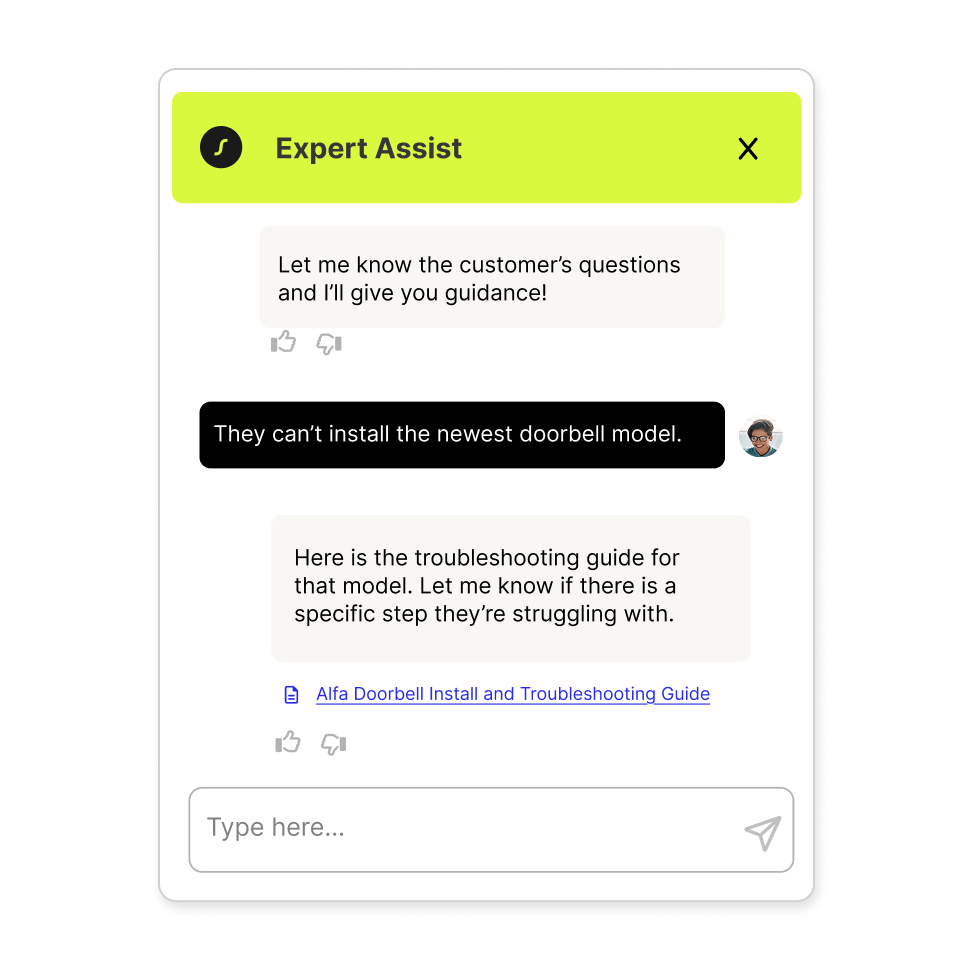
5. Actionable Insights & Reporting
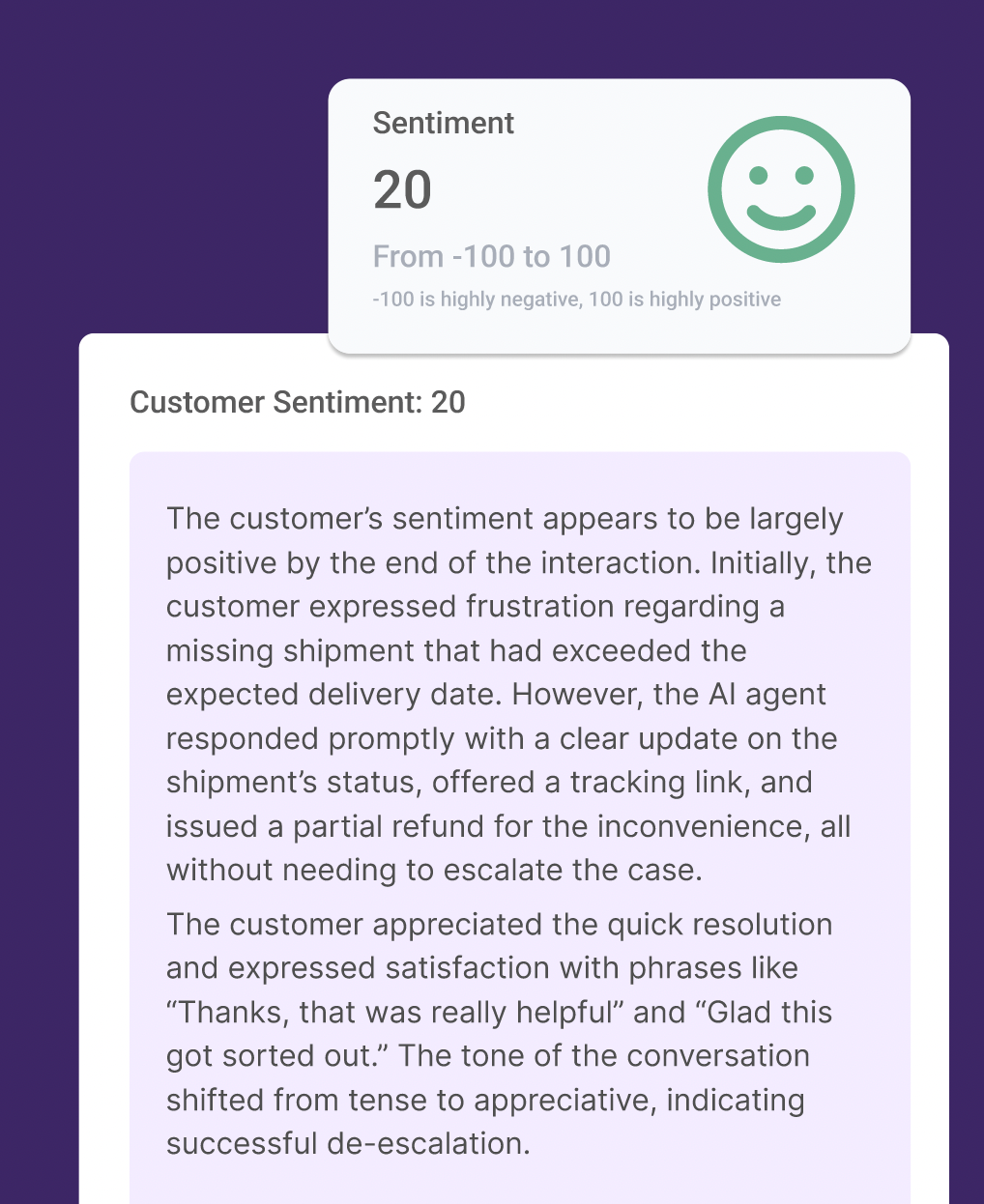
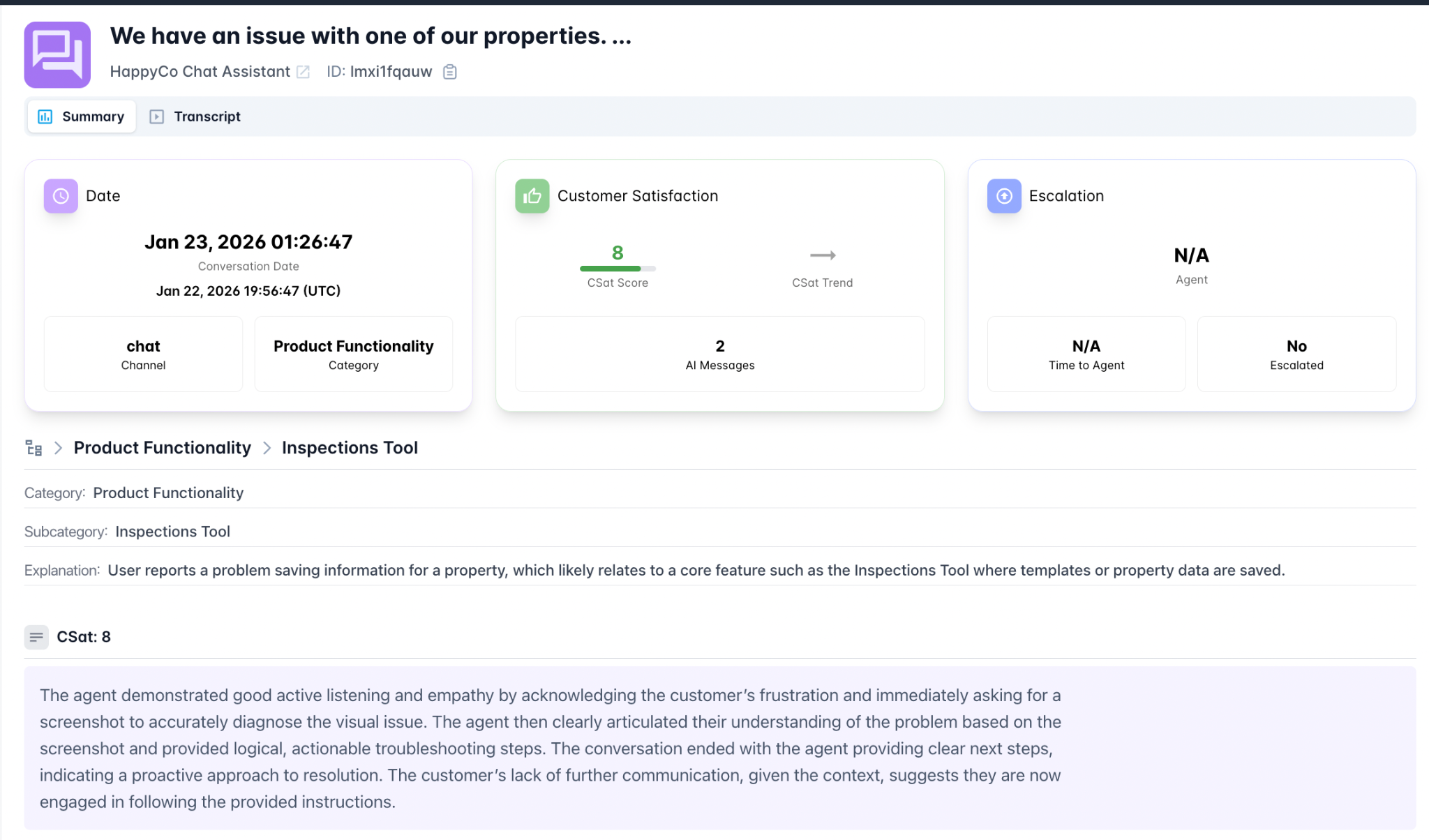
All conversations are logged, analyzed, and categorized to uncover trends, repeated issues, and customer experience insights. AI can automatically calculate CSAT and sentiment scores, highlight reasons behind low or high satisfaction, and provide actionable recommendations, significantly reducing manual QA effort.
Here is a preview of how AI agent platforms like Crescendo.ai provide automated QA and analysis with its VoC tool.
Best AI virtual agent for customer service:
Crescendo.ai: Its advanced AI virtual agents can perform all the customer service tasks with human-like emotional intelligence. It’s 10x faster, has 99.8% answer accuracy, and communicates in 50+ languages with native-level fluency.
Example 2: AI Virtual Agents in the Healthcare Industry
AI virtual agents act like digital front-desk staff and care coordinators for healthcare organizations. They handle routine tasks, guide patients, and support medical teams, while keeping humans in control of care decisions.
1. Patient Scheduling & Intake
AI virtual agents help patients book appointments, reschedule visits, and complete intake forms before they arrive. This reduces waiting time and front-desk workload.
2. Symptom Triage & Care Guidance
Patients can describe their symptoms in plain language, and AI virtual agents guide them to the right next step, self-care, a virtual visit, or an in-person appointment, based on predefined medical protocols.
3. Insurance & Billing Support
AI virtual agents answer common insurance, eligibility, and billing questions instantly. They help patients understand coverage details without needing to wait for a billing representative.
4. Care Coordination & Follow-Ups
After visits or procedures, AI virtual agents send reminders for medications, follow-up appointments, and lab tests. This improves adherence and reduces missed appointments.
5. Administrative Support for Staff
Healthcare staff use AI virtual agents to quickly access patient records, policies, or clinical guidelines. This cuts down time spent searching systems and documentation.
6. Seamless Human Escalation
When a situation becomes sensitive or complex, the AI virtual agent hands off the conversation to nurses, care coordinators, or administrative staff, along with full context, so patients don’t have to repeat themselves.
In 2026, the healthcare industry is increasingly moving toward "agentic" AI that doesn't just talk, but actually performs clinical and administrative tasks.
Here are the top 3 AI virtual agents currently leading the field:
- Hippocratic AI: Specialized "AI Voice Nurses" designed for clinical safety that can handle complex patient interactions like chronic care management, post-discharge follow-ups, and medication reminders.
- Hyro: A "plug-and-play" conversational agent that integrates with hospital databases to automate patient scheduling, physician searches, and prescription refills across web, mobile, and voice.
- Notable Health: An administrative powerhouse that uses "intelligent agents" to automate the "scut work" of healthcare, such as medical coding, insurance eligibility checks, and updating patient records (EHR).
Example 3: AI Virtual Agents in Manufacturing
AI virtual agents act like digital plant coordinators that support workers, suppliers, and customers in real time. They connect with manufacturing systems, understand questions in plain language, and take action automatically, without replacing human expertise.
1. Shop Floor & Operations Support
AI virtual agents help operators and supervisors by answering questions like machine status, downtime reasons, or production schedules. They pull data from MES, ERP, and IoT systems and provide instant updates, reducing delays and manual checks.
2. Maintenance & Downtime Reduction
When a machine shows early signs of failure, AI virtual agents alert maintenance teams, suggest likely causes, and guide technicians through troubleshooting steps. This helps reduce unplanned downtime and keeps production lines running smoothly.
3. Inventory & Supply Chain Coordination
AI virtual agents track raw materials, parts availability, and reorder thresholds in real time. They can notify procurement teams, flag supplier delays, and help avoid production stoppages caused by stock shortages.
4. Quality Control & Compliance
During inspections, AI virtual agents assist workers by providing quality checklists, tolerance limits, and compliance guidelines. They can log inspection results automatically and flag recurring quality issues for review.
5. Workforce & Safety Assistance
AI virtual agents answer safety questions, explain SOPs, and guide workers through incident reporting. New employees can also use them for training support, reducing dependency on supervisors for routine queries.
6. Customer & Supplier Communication
Manufacturers use AI virtual agents to update customers and suppliers on order status, shipment timelines, and delivery issues. This ensures faster communication without overloading sales or operations teams.
In short, in manufacturing, AI virtual agents focus on Industrial AI, where they don't just chat, they monitor machines, optimize production lines, and write automation code.
Here are the top 3 AI virtual agents for the manufacturing industry in 2026:
- Siemens Industrial Copilot: An advanced multi-agent system that helps engineers generate automation code (PLC) and provides shop-floor workers with real-time, natural-language guidance for troubleshooting and maintenance.
- Augury (Process & Machine Health): A specialized agent that uses vibration and ultrasonic data to "listen" to machines, proactively prescribing repairs and optimizing production processes to reduce waste and downtime.
- Sight Machine (AppBuilder CoPilot): A data-driven agent that builds custom industrial applications from natural language prompts, allowing plant managers to instantly create dashboards and workflows without needing a data scientist.
Example 4: AI Virtual Agents in Human Resources
In the HR industry, AI virtual agents function through a Perception–Reasoning–Action loop. Unlike basic chatbots that just search for keywords, these agents are integrated directly into your company’s "nervous system"—the HRIS (Human Resource Information System) like Workday, SAP SuccessFactors, or Oracle.
Here is the step-by-step breakdown of how they operate:
1. The "Perception" Layer (Understanding Intent)
When an employee asks a question like, "How much paternity leave can I take?", the agent doesn't just look for the word "leave."
- NLP & NLU: It uses Natural Language Processing to understand the context. It identifies who is asking (a manager in the UK vs. an intern in the US) and the specific intent.
- Identity Sync: The agent instantly checks the employee's profile in the HRIS to see their tenure, location, and role, ensuring the answer is legally and contractually accurate for that specific person.
2. The "Reasoning" Layer (Accessing the Brain)
The agent then connects to two main data sources:
- Unstructured Data: It scans company PDFs, handbooks, and policy docs (e.g., "The 2026 Benefits Guide").
- Structured Data: It "reads" live databases. For a question about PTO, it doesn't just cite policy; it looks at the actual balance in the payroll system.
3. The "Action" Layer (Execution without Human Intervention)
This is what makes it an Agent rather than just a chatbot. It can execute "write" commands:
- Workflow Triggering: If the employee says, "I'd like to book next Friday off," the agent doesn't tell them how to do it—it does it for them. It submits the request in Workday, pings the manager on Slack for approval, and updates the team calendar.
- System Orchestration: It can work across multiple platforms at once (e.g., updating a tax form in the payroll system while simultaneously filing a ticket in IT to change the employee's access permissions)
In short, in HR, AI virtual agents have moved beyond simple chatbots to become "Superagents" that can autonomously manage the entire employee lifecycle, from sourcing a candidate to processing their final paycheck.
Here are the top 3 AI virtual agents for the HR industry in 2026:
- Paradox (Olivia): A conversational recruiting agent that automates high-volume hiring by screening candidates, scheduling interviews, and handling digital onboarding entirely through chat.
- Leena AI: An autonomous employee experience agent that integrates with your HRIS (like Workday or SAP) to resolve employee queries, manage leave requests, and process payroll changes without human HR intervention.
- Eightfold AI: A deep "Talent Intelligence" agent that proactively identifies skill gaps in a workforce and automatically matches existing employees to internal promotions or personalized upskilling paths.
Example 5: AI Virtual Agents in Cyber Security Industry
In cybersecurity, AI virtual agents, often called Security Copilots or Agentic SOC tools, are designed to combat the speed of modern "AI-powered" attacks by automating threat hunting and incident response. They help organizations respond faster to risks while reducing manual effort for security teams.
1. Security Alerts & Incident Triage
AI virtual agents monitor alerts from security tools and help prioritize them by severity. They explain what the alert means in simple language and guide teams on the next steps.
2. Threat Detection & Response Support
When suspicious activity is detected, AI virtual agents provide context—such as affected systems, potential impact, and recommended actions. This helps teams respond quickly and avoid alert fatigue.
3. Employee Security Assistance
Employees can ask AI virtual agents questions about phishing emails, suspicious links, or security policies. The agent provides instant guidance and helps reduce human-error-based breaches.
4. Access & Identity Support
AI virtual agents assist with access-related requests like password resets, MFA issues, or permission checks—while following identity and access management (IAM) policies.
5. Compliance & Policy Guidance
Security teams use AI virtual agents to quickly look up compliance requirements, internal policies, and audit checklists. This simplifies audits and reduces time spent searching documentation.
6. Seamless Escalation to Security Experts
If a threat requires expert investigation, the AI virtual agent escalates the issue to a security analyst with full context, logs, and recommended actions, so nothing is lost in handoffs.
In short, in the cybersecurity industry, AI virtual agents act like digital security analysts that monitor threats, guide users, and support security teams in real time.
Here are the top 3 AI virtual agents for the cybersecurity industry in 2026:
- Microsoft Security Copilot: A generative AI agent that integrates with the entire Defender and Sentinel ecosystem to summarize vast amounts of telemetry, reverse-engineer malware, and provide step-by-step incident response guidance in natural language.
- CrowdStrike Charlotte AI: A specialized agent built into the Falcon platform that uses "agentic" workflows to autonomously triage security alerts with 98% accuracy and translate simple human questions into complex threat-hunting scripts across an entire organization.
- Palo Alto Networks AgentiX: An autonomous security agent designed for the "Agentic SOC" that centralizes data across cloud and network layers to proactively discover attack paths and automatically generate remediation templates (like Infrastructure as Code) to block breaches.
FAQs on Virtual Agents in Artificial Intelligence
1) What is an AI virtual agent?
An AI virtual agent is a digital support rep that can hold natural conversations, understand intent, and resolve issues or complete tasks (not just answer FAQs) across channels like chat and voice. Gartner describes conversational AI platforms as tools that enable human-like conversations across multiple channels and modalities.
2) How is an AI virtual agent different from a chatbot?
A basic chatbot typically follows fixed scripts/decision trees and handles simple requests, while an AI virtual agent (or “AI agent”) can adapt to context and handle more complex, evolving tasks. ServiceNow summarizes it as scripted chatbots vs. more adaptable AI agents.
3) What can AI virtual agents do in customer support (besides answering questions)?
They can triage issues, capture intent, route to the right team, draft replies, summarize cases, and support agents with next-best actions, reducing repetitive work for humans. Forrester highlights AI’s role in intent capture, routing, summarization, and drafting replies.
4) How do AI virtual agents actually work (in simple terms)?
They combine (1) conversation understanding (what the customer means), (2) knowledge + system access (policies, order data, CRM), and (3) actions/workflows (like refunds, updates, ticket creation). Modern platforms are built to deploy these agents across multiple channels and media types.
5) When should an AI virtual agent escalate to a human?
Escalate when the issue is high-risk, emotionally sensitive, requires judgment, or when confidence is low, then pass the full context so customers don’t repeat themselves. Forrester notes AI’s role in routing to the right skilled agent and collaborating with humans.
6) What channels can AI virtual agents support?
Most modern solutions support multiple channels such as web chat, voice, and other digital messaging experiences, designed for consistent conversations across touchpoints. Gartner’s definition of conversational AI platforms explicitly includes multiple channels and modalities.
7) How do you measure the success of an AI virtual agent?
Track containment/deflection rate, first-contact resolution, time-to-resolution, CSAT, handoff rate, and cost per resolution and compare performance by intent category (billing, returns, troubleshooting). Forrester and Gartner emphasize using AI to improve efficiency and reduce operational load.
8) Will AI virtual agents replace human support teams?
In most companies, they reduce repetitive workload and let humans focus on complex cases rather than fully replacing teams. Gartner forecasts increasing automation for common issues (agentic AI resolving a large share of common requests over time), which typically reshapes staffing toward higher-skill work.
9) How do you keep AI virtual agents secure, compliant, and trustworthy?
Use a governance approach: limit data access by role, log actions, test for failure modes, and apply risk management controls. The NIST AI Risk Management Framework is a widely used reference for building and operating AI systems with trustworthiness considerations (privacy, security, accountability).
10) What’s the best way to start implementing an AI virtual agent?
Start with high-volume, low-risk intents (order status, FAQs, password reset, appointment scheduling), then expand to multi-step workflows once accuracy is proven. Gartner advises focusing on high-ROI customer service AI use cases and aligning value with feasibility.
Wrapping up On AI Virtual Agents
AI virtual agents aren’t here to replace humans; they’re here to do the boring, repetitive stuff really well so humans can do the meaningful work. They answer faster, work 24/7, never lose patience, and know exactly when to call in a real person. In short: they’re the overachievers of customer operations, quietly making teams more efficient and customers a lot happier.
Run Your Entire CX Operation on One AI-Native Platform

Keep Reading
